
“Cassis de Dijon principle”
Switzerland autonomously introduced, and incorporated into national law through the Law on Technical Barriers to Trade, the “Cassis de Dijon principle”, which was developed by the European Court of Justice.
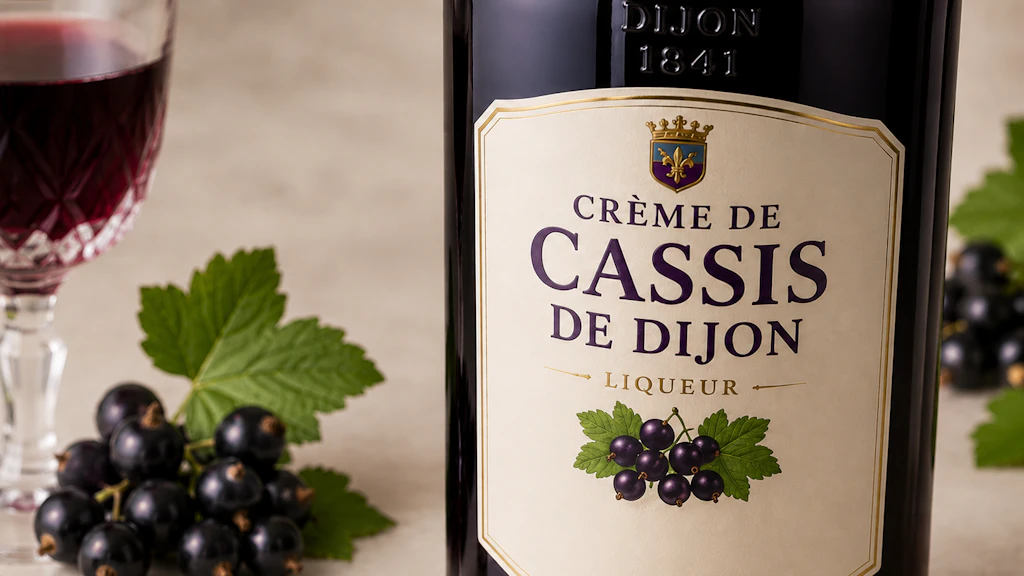
The “Cassis de Dijon principle” stipulates that a product which complies with the technical regulations of the EU, a member state of the EU or that of the EEA, and is legally placed on the market in one of these member states, may in principle be placed on the Swiss market without any further controls (art. 16a of the Law on Technical Barriers to Trade). Exceptions to the principle are only possible when overriding public interests are at stake. An indicative Negative List includes all products excluded from the “Cassis de Dijon principle”.
Swiss manufacturers, who produce exclusively for the Swiss market, can also place products manufactured according to the regulations of EU or EU/EEA member state on the Swiss market (measures aimed at avoiding discrimination of domestic manufacturers).
The application of the “Cassis de Dijon principle” for foodstuffs is subject to specific provisions (authorisation process). The Federal Council may approve, in justified cases, exceptions to the principle when overriding public interests are at stake, such as concerns over public health, animal and plant health or life.
In 2013, SECO published a report on the effects of the “Cassis de Dijon principle” in Switzerland. The report highlights that, following the introduction of the “Cassis de Dijon principle”, a process was set in motion to reduce technical barriers to trade without having a negative effect on the overall protection level. The report also shows that the«Cassis de Dijon principle» helped avoid additional and unfounded barriers to trade, and impeded the creation of new Swiss regulation which diverged from that of the EU.
Special regulation for food
A special regulation applies to food for application of the Cassis de Dijon principle.
Food products that do not (fully) comply with Swiss technical regulations but which comply with the technical regulations of the EU or an EU/EEA member state and are lawfully sold there may also be sold in Switzerland. Unlike other products, foodstuffs require authorisation from the Federal Food Safety and Veterinary Office before being placed on the market for the first time (in German only: Art. 16c and 16d Law on Technical Barriers to Trade and Art. 4–11 of the Cassis de Dijon Ordinance VIPaVl). This authorisation is issued in the form of a general ruling and applies to all food products of the same type. The applicant must prove that the food product in question complies with the technical regulations of the EU or an EU/EEA member state and demonstrate that it is lawfully distributed in the EU or the respective EU/EEA member state. Furthermore, there must be no risk to overriding public interests (including the protection of human, animal or plant life and health), pursuant to Article 4 paragraph 4 letters a–e Law on Technical Barriers to Trade.
Exceptions to the Cassis de Dijon principle
The Cassis de Dijon principle does not apply to certain products, for example those which are subject to authorisation or for which a prior import licence is required (Art. 16a para. 2 let. a–d Law on Technical Barriers to Trade). The Federal Council may decide on further exceptions (Art. 16a para. 2 let. e Law on Technical Barriers to Trade). All exceptions must meet the requirements of Article 4 paragraphs 3 and 4 Law on Technical Barriers to Trade; this is determined by means of an internal administrative procedure.
The complete list of exceptions is reviewed every five years.
A list of products that cannot be imported into Switzerland and sold under the Cassis de Dijon principle (the negative list exists as an enforcement aid). This non-exhaustive list is not legally binding.
Index
Contact
Foreign Economic Affairs Directorate
Special Foreign Economic Service / Non-Tariff measures
Holzikofenweg 36
CH - 3003 Bern