Objectives and challenges of foreign economic policy
Foreign economic policy serves to maintain and increase the prosperity of Switzerland’s population. Switzerland's policy of openness and integration into global value chains has made possible a high living standard in recent years.
As a medium-sized national economy with few natural resources, Switzerland relies on the easy access to foreign markets. With its foreign trade policy, Switzerland creates the framework conditions and instruments so that foreign trade can continue to contribute to the Swiss standard of living.
International trade enables the division of production processes, which leads to efficient and cost-effective production. The Swiss economy can thus specialize, which increases value creation and raises incomes. Consumers gain access to a wider range of products and lower prices.
Access to foreign markets is not just about additional sales markets. Given the high cost level, companies in Switzerland depend on the smooth procurement of suitable inputs at lower prices abroad in order to focus on value-intensive activities.
Importance
At CHF 85,000, Switzerland’s per-capita GDP is among the highest in the world. Access to international markets, participation in international value chains through specialisation, and the resulting innovative capability are crucial to this high level of prosperity.
Foreign markets are both important sales markets for products from Switzerland and central procurement markets for the most suitable inputs. Imports intensify competition, which increases innovation and productivity.
Open markets not only generate added value and create jobs, but also benefit consumers through greater product diversity and lower prices. Seven out of ten employees in Switzerland work in companies that are active in international trade in goods. Open markets are particularly crucial to small and medium-sized enter-prises (SMEs). They make up 99 % of Swiss businesses and employed two thirds of all workers in 2018.
Cross-border economic activities also lead to greater prosperity abroad. Developing countries and emerging markets have benefited from integration into world trade in recent decades.
Trade and globalization can lead to increased structural change. In Switzerland, various policy areas - such as labor market and social policy, or regional and tax policy - make a decisive contribution to cushioning structural change and taking distributional effects into account.
Objectives
To maintain and increase the prosperity of the population in Switzerland, foreign economic policy pursues three strategic goals.
Switzerland seeks a broad-based, multilateral and reliable rules-based international system for cross-border economic relations. Such a system of international rules and obligations creates legal certainty and stability. This makes Switzerland attractive to high value-added businesses, which contribute to prosperity and employment in Switzerland.
Switzerland seeks legally protected access to international markets that is as extensive as possible. For businesses and consumers mutual access to market is important for selling exports as well as for procuring production inputs and benefitting from product diversity and lower prices.
Switzerland advocates cross-border economic relations that contribute to sustainable development at home and abroad. It is committed to the creation of a framework that corrects market failure, such as negative externalities of economic activity.
Challenges
The international context sets the framework for Switzerland's foreign economic policy. The following major trends are decisive for the positioning and orientation of the strategy.
On the international stage, a number of emerging actors have gained importance, contributed to geopolitical shifts, and called into question the established world order. Multilateralism has faced challenges for some time. This is shown in particular by the developments in the World Trade Organization (WTO).
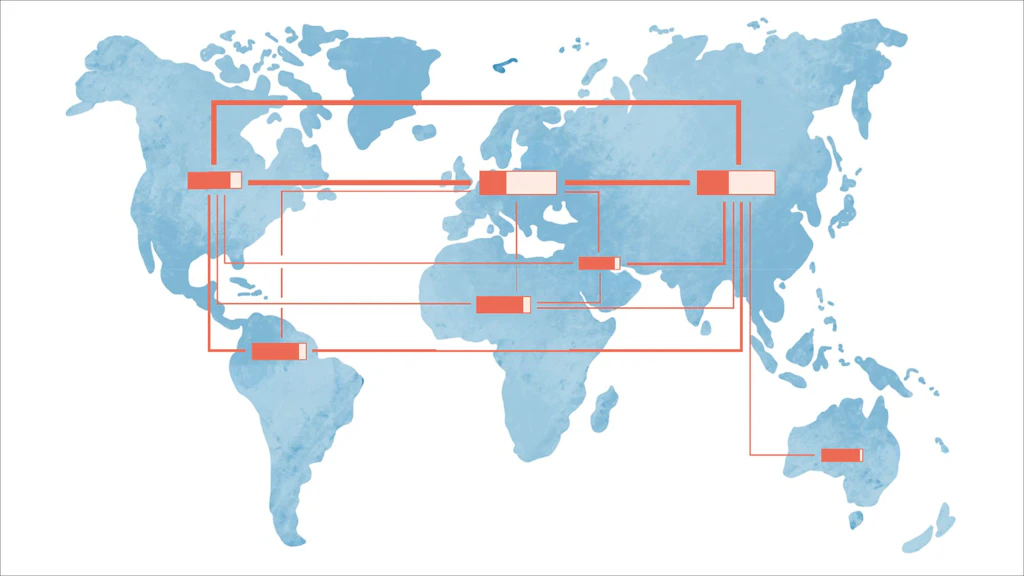
The West is increasingly competing with the systems of alternative economic orders. The influential economic actors, namely China, the EU and the United States, represent different government, economic and value systems. They are shaping international debate with their beliefs and seeking broad implementation of their regulatory approaches.
While distant markets continue to be opened up, we can observe a re-gionalisation of international value chains. This trend is also evident with the conclusion of major regional trade agreements, such as the Regional Comprehensive Economic Partnership (RCEP) or the Comprehensive and Progressive Agreement for Trans-Pacific Partnership (CPTPP).
Protectionist tendencies have grown in recent years and trade barriers as a political lever have become more important. These are far-reaching developments for Switzerland as an internationally-integrated economy.
Structural change and growing domestic inequality in many countries, the resulting domestic policy tensions, and global threats – such as global health risks, climate change and biodiversity loss – are also changing the political perception of globalisation. The criticism levelled against globalisation ranges from calls for enhanced social and environ-mental standards to a fundamental rejection of trade and multilateral economic cooperation. It is important to emphasise that economic prosperity and environmental and social policy are mutually dependent.
The COVID-19 pandemic has led to record slumps in economic performance across the world and has compounded regional, social and economic challenges in a number of states. The debt burden has risen significantly in many countries due to the economic mitigation measures put in place. The pandemic has illustrated the global interconnectedness of value chains and reinforced protectionist tendencies.
Foreign economic policy is becoming more thematically diverse.
The importance of sustainable economic development is reflected in the 2030 Agenda of the United Nations and in multilateral agreements, such as the Paris Agreement. Besides considering the impact on natural resources (climate, air, waterways, biodiversity), the aspects that are relevant to trade also include compliance with the International Labour Organization’s core labour standards, particularly local employment conditions.
Technological developments change both the structure of trade flows and the nature of cross-border economic relations. Guaranteeing a suitable regulatory framework for the digital economy is crucial, both for the attractiveness of Switzerland as a location and to ensure that cross-border economic relations are as smooth as possible. Switzerland faces different regulatory approaches, which are mainly shaped by the United States, the EU and China.
The foreign economic policy strategy provides mid- to long-term orientation of Swiss foreign economic policy.
Foreign Economic Policy Reports
The report on foreign economic policy provides an overview of important issues in Swiss foreign economic policy and places them within the context of the strategy.
Contact
State Secretariat for Economic Affairs SECO Holzikofenweg 36 CH - 3003 Bern