
Swiss Export Risk Insurance
Swiss Export Risk Insurance (SERV) supports the Swiss export industry with insurance solutions for exporters and financial institutions. SERV is a public-law institution of the Confederation. It operates on a self-financing basis and steps in where private insurers are unable or unwilling to provide cover.
Protection for Swiss exporters
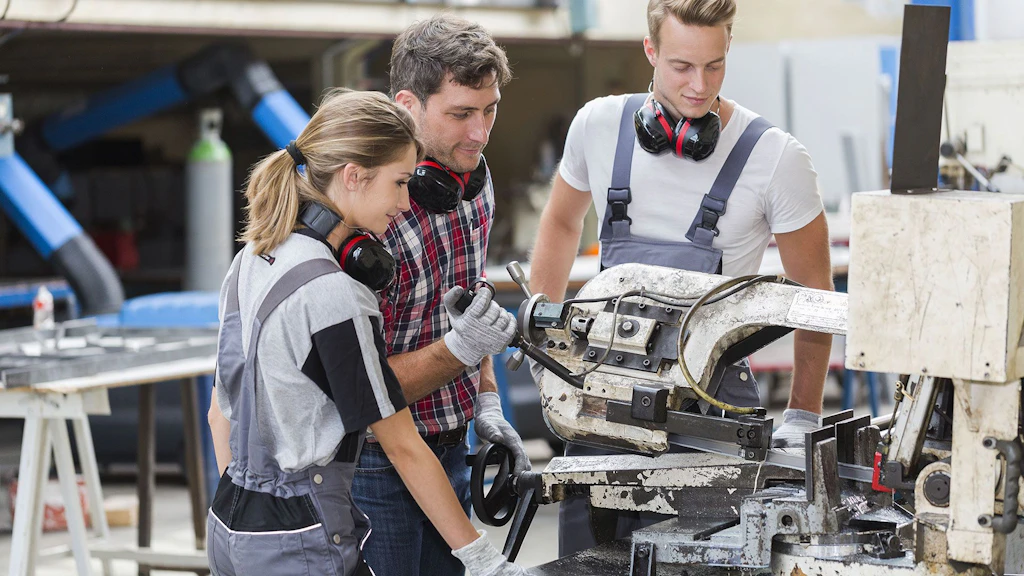
Through its insurance products, SERV strengthens Swiss exports and helps to safeguard and create jobs in Switzerland. It covers risks in international export business that private insurers do not take on. Swiss exporters – mostly SMEs – but also banks can insure themselves with SERV against risks including political risk and payment default. Each year, SERV enables export transactions worth billions of Swiss francs.
Role of the Federal Council and SECO
SERV operates independently within the framework of the applicable legislation. As a public-law institution of the Confederation, it takes account of Switzerland's foreign policy objectives, for example in the areas of the environment, development, human rights, democracy and peace.
The Federal Council sets SERV's strategic objectives, approves its annual accounts and annual report, and takes decisions on particularly significant insurance transactions and on the maximum volume of insurance commitments. The Federal Council also appoints SERV's board of directors, its supreme governing body.
SECO's Promotion Activities Directorate exercises supervisory responsibility over SERV and serves as its central point of contact within the Federal Administration.
International cooperation
Export promotion is governed by international rules discussed and agreed in bodies such as the OECD. SECO represents Switzerland in the relevant OECD expert groups, together with SERV.
OECD Arrangement on export credits
Since 1978, the OECD Arrangement on Officially Supported Export Credits has established common rules to prevent distortion of competition arising from state-supported export credits and export risk insurance. The Arrangement sets requirements for minimum down payments, maximum credit terms, minimum interest rates, and the conditions applicable to tied aid credits. It also regulates minimum premium rates for guarantees and defines the conditions under which exports may be supported through financing and insurance provided by public bodies. The participants to the Arrangement currently are Australia, Canada, the European Union, Japan, New Zealand, Norway, South Korea, Switzerland, Turkey, the United Kingdom and the United States.
OECD Export Credits Group
The OECD Export Credits Group, to which the majority of OECD countries belong, addresses cross-cutting issues such as environmental standards, anti-corruption measures, and the treatment of heavily indebted developing countries. These international rules ensure that such considerations are consistently taken into account when official export credits and insurance are granted.
Paris Club
The Paris Club is an international forum of 22 industrialised nations that meet regularly to work with over-indebted countries on sustainable solutions for the repayment of their official debts. Unlike the London Club – where private commercial banks negotiate directly with the debtor country – the Paris Club deals exclusively with sovereign and officially insured claims guaranteed by the debtor country. Decisions are based on the Club's principles and take into account both the debt situation and the level of development of the country concerned. Since 2020, the Common Framework – established jointly by the G20 and the Paris Club – has complemented this process by providing a broader, internationally coordinated framework for the debt restructuring of low-income countries, and by bringing in significant bilateral creditors outside the Paris Club, such as China. SECO represents Switzerland in the Paris Club.
Further information
Index
Relevante Themen

Trade and economic agreements
Switzerland relies on open markets. Through free trade agreements, it improves access to global markets and strengthens its competitiveness, whilst upholding environmental and labour standards.

Multilateral economic relations
Switzerland actively promotes an open, fair, and rules-based trading system, strengthening transparent trade rules and international cooperation through the WTO, the OECD, and new partnerships.

Switzerland’s foreign economic policy strategy
The foreign economic policy strategy provides mid- to long-term orientation of Swiss foreign economic policy.
Contact
Promotion Activities Directorate
Export and Investment Promotion
Holzikofenweg 36
3003 Bern